Monday, 1 April 2024

Assassination attempt on Notre-Dame foiled? – Suspect arrested

Notre-Dame plot: Five women in court over foiled car bomb attack

Publication at a sensitive time: according to the French Sunday newspaper "Journal du Dimanche", a 62-year-old man has been questioned and arrested on suspicion of terrorism. 

He is said to have planned a violent action against Notre-Dame Cathedral in Paris, the paper reports in its Easter edition. 

The Egyptian was arrested and charged at the beginning of March. 

The police suspect that the man is connected to the terrorist organisation "Islamic State", according to the report.

Minister of The Interior Gerard Darmanin had declared the highest terror alert level for Easter and recommended that the authorities post a police officer outside every Christian church. 

According to Prime Minister Gabriel Attal, a total of 45 attack plans have been foiled since 2017. Religious buildings are considered to be prime targets for jihadists.

Notre-Dame Cathedral in Paris is one of the most famous buildings in the world. 

The Gothic episcopal church was severely damaged in the devastating fire on 15/16 April 2019. 

The wooden roof truss from the Middle Ages, parts of the vaulted ceiling and the ridge turret from the 19th century were destroyed.  

Its reopening is planned for the end of 2024.

Holy See Attempts to Assuage Doubts About the Pope's Health

Concerns for Pope's health as audiences cancelled: Vatican says no cause  for alarm - Catholic Herald

The director of the Gemelli clinic publicly discussed the Pope's health in what appears to be a communication strategy organized by the Holy See to defuse persistent rumors about the deterioration in the Roman Pontiff’s health. 

The latter showed obvious signs of fatigue during the Palm Sunday celebration on March 24, 2024.

On March 25, 2024, Dr. Sergio Alfieri – who had the duty of operating on Pope Francis twice in the last three years, in July 2021 and June 2023 – spoke in Corriere della Sera .

The practitioner explains that “the Holy Father is well consistent with his age and his occasional breathing difficulties in the colder periods, also due to the previous lung surgery he underwent many years ago.”

The Pope does not suffer from any serious illness and is regularly monitored, this is the intended message that the doctor who also directs the Gemelli Hospital in which the Roman pontiffs have become accustomed to receiving the most important medical care since the attack against John Paul II in May 1981. 

“I do not see him [the Holy Father] every day, but I can assure you that he has no particular illnesses. He undergoes periodic checks,” says Sergio Alfieri.

Fr. Enzo Fortunato, a spokesman for St. Peter's Basilica, made the collowing comments in Vatican Insider: “Before the recitation of the Passion of Jesus before the crosses of the world, before the recollection of thousands of pilgrims from all over the world, the Pope probably preferred an eloquent silence which was more incisive, in my opinion, than many words,” declared the priest.

For the surgeon who operated on the Holy Father, the papal silence of Palm Sunday must be placed in the context of the immense responsibilities of Peter's successor: “He is a man with the responsibilities as the head of state in the Vatican. When he appears at his window, he addresses more than a billion and a half Catholics, something that does not exactly to everyone his age.”

The current communication from the Vatican on the Pope's health should be compared to the autobiography that the Pope has just published. 

Addressing the recurring speculations on medical problems which could compromise the end of his Pontificate, Francis insists that he does not suffer from any problem which would require a resignation on his part.

The fact remains that Pope Francis did not go to the Colosseum on Good Friday evening for the Stations of the Cross, even though, for the first time in his pontificate, he had written the meditations himself. 

The official reason was to “preserve his health in view of the Vigil and Holy Mass on Easter Sunday.”

Pope’s ‘white flag’ ironically sparks political civil war in Italy

Pope Francis, Ukraine, and the 'white flag' - Intrigue

In keeping with the law of unintended consequences, Pope Francis’s recent invocation of a “white flag,” designed to promote peace between Russia and Ukraine, seems instead to have sparked a budding civil war in Italian politics, pitting Catholics against secular progressives in the country’s main center-left party.

The focus for the tension is Marco Tarquino, a veteran Italian journalist who served as editor-in-chief of Avvenire, the official newspaper of the powerful Italian bishops’ conference, between 2009 and 2023, and during much of that time he was also a consultor for the Vatican’s erstwhile Pontifical Council for Social Communications.

Tarquino emerged as a forceful advocate for Catholic, and, more specifically, papal positions in public debates, and he’s remained so even after stepping away from his official roles. Specifically on Ukraine, he’s become among the most outspoken backers of Pope Francis’s calls for an immediate cease-fire and negotiations, breaking with the official line of both Italy’s center-right government and its main center-left opposition of strong support for Ukraine.

Tarquino’s most celebrated, and controversial, take on the war came in a recent TV appearance: “If Zelensky would pack his bags, the war already would be over.” In another celebrated soundbite, Tarquino objected when someone called Ukrainian defenders heroes: “The heroes are elsewhere, they don’t kill,” he said.

All of which brings us to the June 6-9 European elections, when voters across the continent will elect 720 members of the European Parliament. In Italy, candidates for the parliament are selected by political parties, and often they’re loyalists or functionaries who are owed a favor, or veteran pols who lost their last race and need a sinecure.

Every now and then, however, a party leader will decided to nominate a candidate to send a message, and such would seem to be the case this time around with Italy’s Democratic Party, its main center-left faction and the leader of the opposition to the center-right government of Prime Minister Giorgia Meloni.

Elly Schlein, the 38-year-old leader of the Democrats and a veteran of Barack Obama’s 2008 and 2012 campaigns in the U.S., appears set to make Tarquino a candidate for the party, likely in his home region of Umbria. According to media reports, the idea was first floated by a small political movement in Italy known as “Democracy Solidarity,” which is close to the Community of Sant’Egidio, the country’s most prominent center-left Catholic movement.

In part, Tarquino’s candidacy is being read in as an effort by Schlein to broaden the Democrats’ electoral base, appealing to Catholic moderates. That’s long been an ambition of Italy’s leftist factions, given the strong tradition of social Catholicism in the country and the widespread presence of progressive Catholic movements with strong organizational capacity.

More specifically, the Tarquino candidacy is also seen as a potential way for the Democrats to peel off some support from the major left-wing challenger to the Democrats, the populist Five Star Movement led by former Prime Minister Giuseppe Conte, which has a quasi-pacifist position on Ukraine.

Conte and the Five Stars have repeatedly criticized what they see as the “Atlantic” position of both the government and the mainstream opposition, which, in Italian argot, is understood to mean pro-American. By tapping Tarquino, therefore, Schlein and the Democrats might be in a position to capture some anti-war voters who otherwise might be inclined to side with the Five Stars.

(Most recent polls show that while Italians broadly sympathize with Ukraine, they’re opposed to furnishing Kyiv with weapons and support the idea of a negotiated settlement.)

However, the opening to Tarquino has stirred strong opposition within the Democrats, from two contrasting factions.

On the one side are the centrists who support Ukraine’s efforts at self-defense and oppose any move that might be seen as capitulation to Putin. Former Minister of Defense Lorenzo Guerini, for instance, has said “enough with the ambiguities” on Ukraine, because “there’s a country that’s been victimized and an aggressor … we know whose side we’re on.”

At the same time, the more liberal and secularist wing of the Democratic Party has also rebelled against the idea of a Tarquino candidacy, not for his positions on Ukraine, which they broadly share, but his stances on the “life issues” – abortion, euthanasia, civil unions, gay marriage, surrogate motherhood, and the need for a controversial anti-homophobia law known here as the “Zan bill” after the openly gay parliamentarian who introduced the measure, Alessandro Zan.

Maria Laura Rodotà, a leftist journalist, recently opined that backing Tarquino would amount to a “slap in the face to those citizens who voted for Schlein in the primaries as something of the left.”

For the moment, Schlein’s options remain open, since the formal list of candidates for the European elections doesn’t have to be finalized until May 1. How she threads the needle may have real political consequences, since polls at the moment show Meloni’s “Brothers of Italy” party running ahead of the Democrats by about eight points. Overall, forecasts are for right-wing populists to make major gains in the European elections, though probably not enough to form a majority.

In the meantime, Tarquino’s fate likely also will be seen as a sort of referendum on whether Catholics of his ilk (liberal on social matters, traditional on life issues) have a future in any of Italy’s major left-wing factions, or whether the country is destined to follow the path of the U.S. and other Western democracies, with that kind of voter becoming increasingly politically homeless.

Pope says he was 'used' in 2005 conclave: Ratzinger 'was my candidate'

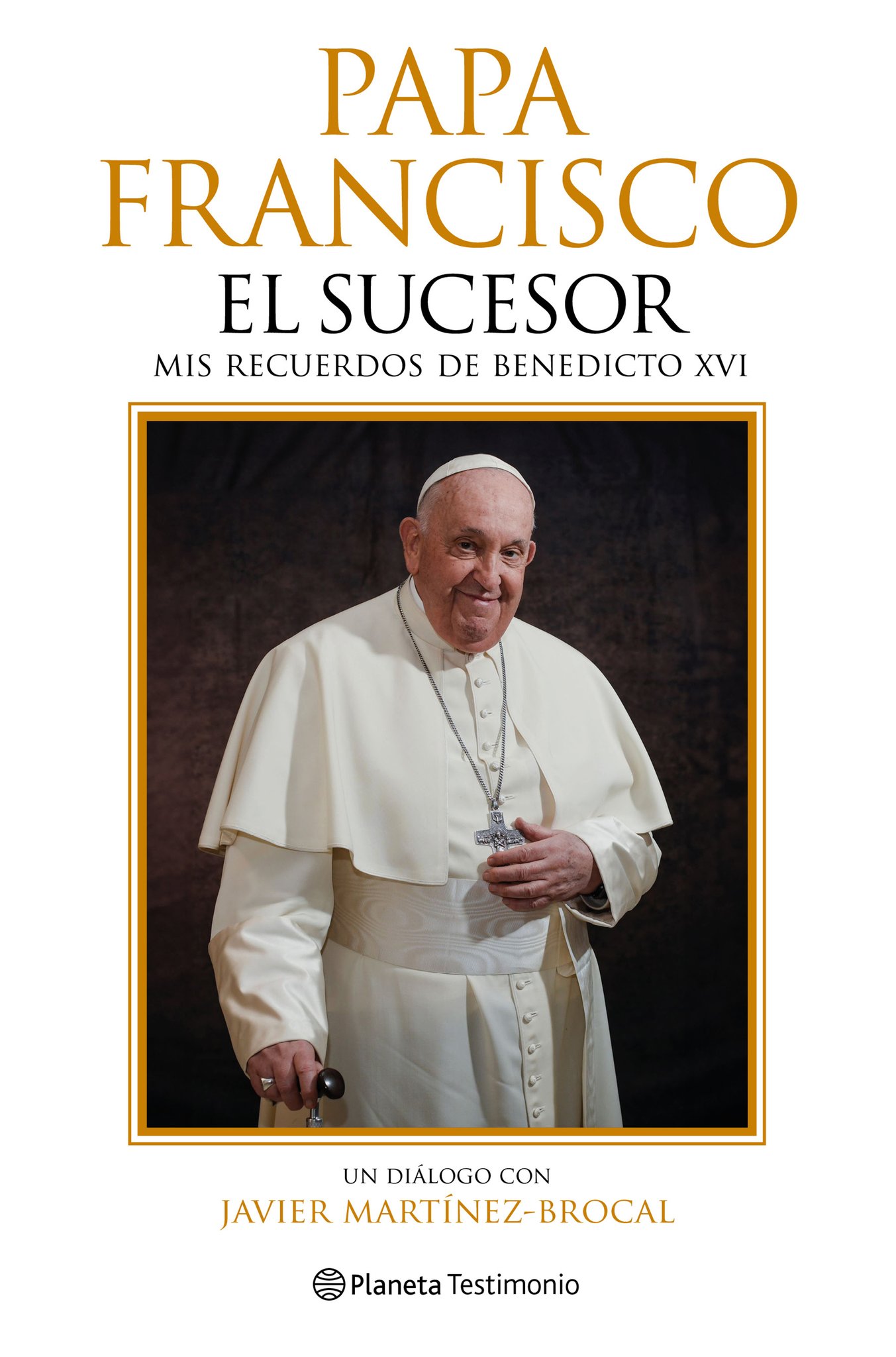
ROME REPORTS on X: ""The Successor" Pope Francis recounts nearly 10 years  of relationship with Pope Benedict XVI in a new book written with  @javierMbrocal, collaborator and former director of Rome Reports

Pope Francis voted for Cardinal Joseph Ratzinger, the future Pope Benedict XVI, in the 2005 conclave that followed the death of St. John Paul II.

"He was the only one who could be pope at that time," Pope Francis said about his immediate predecessor in an excerpt from the upcoming book "El Sucesor" ("The Successor"). The excerpt was published March 31 by the Spanish daily newspaper ABC.

Pope Francis told Spanish journalist Javier Martínez-Brocal that he voted for Cardinal Ratzinger in the 2005 conclave because after the "dynamic, very active pontificate" of St. John Paul, "a pope was needed that would maintain a healthy balance, a transitional pope."

"El Sucesor" is a book-length interview with Martínez-Brocal focused on Pope Francis' relationship with Pope Benedict. 

Discussing the conclave that he participated in as Cardinal Jorge Mario Bergoglio of Buenos Aires and which elected his predecessor, Pope Francis said he was "used" by other cardinals attempting to block Cardinal Ratzinger's election to the papacy. He was widely reported to have come out second on the final ballot.

Pope Francis said that a group of cardinals deployed a "full-fledged maneuver" by putting forward his name "to block Ratzinger's election and then negotiate for a different, third candidate." He said he had received 40 of the 115 votes from among the cardinal-electors in the Sistine Chapel -- "enough to stop the candidacy of Cardinal Joseph Ratzinger, because if they would have kept voting for me he would not have been able to reach the two-thirds needed to be elected pope."

"They still did not agree on who, but they were on the verge of throwing out a name," he said.

Once he learned of the strategy after the second or third ballot cast in the April 18-19 conclave, Pope Francis said he told Colombian Cardinal Darío Castrillón Hoyos to not "joke with my candidacy" and that he would not accept being pope if he were elected. "And from there Benedict was elected," he said.

Pope Francis said the group of cardinals who had put him up for election later told him they did not want a "foreign" pope. 

Although he did not explain what the comment meant, the term "foreign" was used in media reports after the 1978 election of St. John Paul II, the first non-Italian pope since 1523. 

Although Pope Francis was born and raised in Argentina he is ethnically Italian.

Pope Francis said that Cardinal Ratzinger "was my candidate" in the conclave and that he came out of the conclave feeling pleased.

"If they had elected someone like me, who makes a big mess, he would not have been able to do anything," he said. "Benedict XVI was a man who went with the new style, and it wasn't easy for him. He found a lot of resistance inside the Vatican."

Asked what he thought the Holy Spirit was saying to the Catholic Church through the election of Pope Benedict, the pope said the Spirit was saying, "Here I am in charge. There is no room for maneuvering."

In the book excerpt, Pope Francis prefaces his response to the journalist's questions about the 2005 election by explaining that while cardinals are sworn not to reveal what happens in a conclave, "popes are allowed to tell."

The book is scheduled to be released in Spanish April 3; no publication date for an English-language translation for the book has yet been announced.

4,000 Nicaraguan police deployed to prevent Holy Week processions

Over 4,000 police officers were sent to Nicaragua’s churches to prevent outdoor Holy Week processions, according to a report by the online Argentine news site Infobae.

“There were at least two police officers in each church, and in some churches several patrol cars arrived with special operations agents,” said Martha Patricia Molina, a human rights attorney.

Even as the Nicaraguan government cracked down on Holy Week processions, the nation’s vice president - Rosario Murillo, the wife of President Daniel Ortega - claimed in a radio address that the government was supporting popular Holy Week activities, in accord with “the way of Christ Jesus: love of neighbor, love among us, brotherhood, fraternity, and life with dignity.”

Papal gift to Rome’s priests: book on discernment

At the Holy Thursday Chrism Mass, Pope Francis gave a book to Rome’s priests: Sul discernimento [On Discernment].

The book is a collection of the Pope’s Wednesday general audiences on discernment, given between August 2022 and January 2023. 

The book includes a foreword by Father Antonio Spadaro, SJ, and an essay by Fathers Miguel Àngel Fiorito, SJ, and Diego Fares, SJ.

Father Spadaro, formerly editor of La Civiltà Cattolica, is now undersecretary of the Dicastery for Culture and Education. 

Fiorito (1916-2005) and Fares (1955-2022) were Argentine Jesuits; the former was the future Pope’s spiritual director, while the latter was received into the Society of Jesus when the future Pope was a Jesuit provincial.

Opus Dei rejects claims of 'exploitation' made by former Irish member, who joined aged 15

Unveiling Opus Dei: Irishwoman from FT investigation speaks out

OPUS DEI HAS rejected claims by an Irish woman that the secretive Catholic group exploited her when she was a member during the late 1970s.

Anne Marie Allen spoke out alongside other former members against Opus Dei in a recent investigation by the Financial Times. Allen spent over five years as an unpaid assistant numerary in the Opus Dei religious group.

She has called for compensation for her work and that Opus Dei are held accountable for the alleged poor treatment and exploitation of its former members.

While Opus Dei have said it is “very sorry and deeply regret that Anne Marie Allen was hurt by her time in Opus Dei”, it rejected claims of poor treatment and exploitation, adding that former members must file an official complaint.

In the newspaper investigation a number of assistant numeraries – roles filled by women in the religion to serve other members – highlighted abuse they recieved from Opus Dei.

Allen left school in 1975 to join a catering college at Ballabbert School, which was run by the religious group, at the age of 15. She claims the college did not have a curriculum and that members of Opus Dei were assigned to each student to bring them into the religion.

Allen told RTÉ’s Upfront podcast that the members would make the students “feel special” and that frequent “love bombing” would take place. In later conversations, the members would promote of the practices of Opus Dei in order to deal with their issues.

In the months after starting at Ballabbert, Allen was asked if she wanted to begin a ‘vocation’ – a dedication to the Opus Dei religion – and begin work as an assistant numerary, a domestic work and catering role offered to, often uneducated, women.

Allen accepted the position but but has stressed the fact that she was underage at the time.

“At that point, I was 16. I was a bit taken aback and I didn’t have the strength to challenge that you know and then next thing the word vocation kept being mentioned,” Allen told the programme.

Allen detailed that the treatment she recieved from the secretive Catholic group led to her suppressing her own values, thought processes and opinions and the daily routine stripped her of a life.

When not working for its clients, she lived in an Opus Dei centre and took part in what she found to be “uncomfortable” practices of the religion, such as wearing a ‘cilice’ – a strap with sharp wire on one side – on her leg and deprived herself of food and sleep.

“It was like Catholicism on cocaine,” Allen said. “You got up, you had to go to Mass, you had to do two, half-hours of prayer, you’d to do 15 minutes of spiritual reading, I forget how many decades of the the Rosary, you had to examination of conscience at nighttime. That was just on a daily basis.

“You had silence from two o’clock in the day until six o’clock in the evening. And the same from nine o’clock at night in to six o’clock the next morning,” she added.

She added: “I was told: ‘You have a vocation as big as a house. And if you don’t follow it, you’re going to go to hell and your family will go to hell, and bad things will happen to you. If you leave Opus Dei bad things will happen to you’.”

Allen eventually left the religious group after her Father stopped her from returning to the centre when she was visiting family – however, she says it took her almost two years to regain her own opinions again.

“It took until I was brave enough to say, ‘I don’t want to go back. I can’t do this anymore. This is not me’. So took all of that length of time. And it was quite difficult. Because Opus Dei pursued me long and hard during that time.”

In a statement provided to the RTÉ programme, Opus Dei acknowledged that Allen was hurt by her time as an assistant numerary in the religious group, but rejected claims that its members exploited her.

With regard to her experience in the late 70s, we reject the accusation of exploitation.

“Assistant numeraries are women in Opus Dei who, like all the other members, aim to love God and others through their work and daily life. In their case, their chosen work is caring for the people and centres in the family setting of Opus Dei. This work is paid in accordance with the employment legislation of the countries in which they live.

“The vocation of assistant numerary is being followed by thousands of women around the world with freedom, love and commitment, and has the same dignity as any other life choice. In fact, many women who joyfully live out this vocational call made a public plea a few months ago for their free and conscious choice to be respected and not demeaned.

“In cases in the past where there may have been irregularities in social security contributions, or bad experiences within the organisation, Opus Dei recognises that these things can have happened, but needs the people concerned to make a formal complaint. They can do so,” it added.

Church of England's gone stark, raving bonkers. If it persists in telling white worshippers they're racists it'll condemn itself to oblivion (Opinion)

Readers of Private Eye will remember the magazine’s fictional vicar, the Rev J. C. Flannel. He is a worldly, waffley, wishy-washy sort of fellow.

Flannel steers clear of religious conviction. He is the kind of bland clergyman who likes to blather on about TV soap operas in order to seem relevant.

The Rev J. C. Flannel has been overtaken by history. He would be out of place in the modern Church of England. For one thing he is male and white, which would put him at a disadvantage in some quarters.

More important, I doubt that Flannel could get to grips with the craving for ‘racial justice’ born of ‘critical race theory’ that obsesses so many Anglican bishops and ­senior clergy.

I know the Church of England pretty well. My father was a priest, as were two uncles. Two of my brothers-in-law were bishops, and a third a canon. A nephew is a vicar. I can say with confidence that the Church whose ways I have observed, and in which I have worshipped, is one of the least racist institutions in our country.

However, the folk who run the C of E think differently. For many of them ­racism is ‘embedded’ — this is a key, often-used word in critical race theory — in our national Church, and must be rooted out.

They would doubtless say that, if I don’t discern endemic racism in the Church, it is because I am a white, relatively privileged person. Racism is buried so deep that you can’t necessarily see it. It is cause for shame and, if I and people like me can’t appreciate this truth, it is because we are fundamentally racist.

Justin Welby, Archbishop of Canterbury, has proclaimed that the Church of England is ‘deeply institutionally racist’ and called for ‘radical and decisive’ action. This has entailed setting up a ­Commission for Racial Justice, and the appointment of a ‘racial justice directorate’.

The belief that the Church is ­profoundly racist is widespread in higher ecclesiastical circles. ­Anyone who doesn’t share it would be well-advised to keep quiet if interested in promotion.

When he was a black ordinand, Calvin ­Robinson was told by Sarah Mullally, Bishop of London: ‘As a white woman I can tell you that the Church is ­institutionally racist.’ He didn’t agree. Robinson subsequently left the C of E, and is now a priest in another denomination.

This past week — Holy Week, when Christians recall the Passion and Crucifixion of Christ — wondrous storms have raged that have made me seriously wonder whether the Church of England has gone stark, raving bonkers.

Miranda Threlfall-Holmes, who is white and Archdeacon of Liverpool, declared on social media: ‘Let’s have anti-whiteness, and let’s smash the patriarchy.’ An archdeacon is one rung below a bishop in the ecclesiastical hierarchy and, although she may sound like a demented adolescent, Dr Threlfall-Holmes has resided on this earth for 50 years.

Unsurprisingly, some people were dismayed by her unsolicited eruption. She partly backtracked, assuring us that ‘whiteness does not refer to skin colour per se but to a way of viewing the world where being white is seen as normal and everything else is considered different or lesser’. This is unlikely to reassure many white people.

In view of Dr Threlfall-Holmes’s right-on opinions about the historical burdens of whiteness, I’ve little doubt she will soon be made a bishop.

Not to be outdone in this spate of Merseyside madness, the Rector of Liverpool, Canon Crispin Pailing, this week decided to resign. He told his congregation that he could ‘no longer, in good conscience’ represent a Church which ‘perpetuates bias and discrimination against sections of society’.

Dr Threlfall-Holmes’s somersaults followed some unconvincing cartwheels performed by the Archbishop of Canterbury in an interview with Times Radio.

Justin Welby was asked about the Diocese of Birmingham’s recent advertisement for an Anti-Racism Practice Officer (Deconstructing Whiteness)’ to work in an 11-strong ‘racial justice’ team. This post is entirely consistent with Dr Welby’s ­misguided programme to stamp out imagined racism in the C of E.

And yet, confronted with the absurd advert, the Archbishop became giggly and disowned it. He said it sounded like the BBC management lingo used in the satirical sitcom W1A.

This was disingenuous, partly because Dr Welby has ­zealously promoted ‘racism officers’, and partly because he is himself no stranger to impenetrable, bureaucratic language.

The Commission for Racial Justice he set up was evidently not intended to be balanced, fair and proportionate. Seven of its 12 members are non-white, including its chairman, former Labour Cabinet ­Minister Lord Boateng. The Commission produces periodic reports whose effect is to engender guilt in white ­members of the Church ­of England.

Having examined the biographies of its members, I think it probable that almost none of them could be described as even remotely Tory. Several of them haven’t tried to conceal their disdain, even dislike, for traditionalists, and have tweeted or retweeted remarks on social media that are both Left-wing and lacking in Christian charity.

For example, Professor Duncan Morrow, who is white, has laid into the Tories more than once. ‘When this round of Conservatives finally allow the UK population to choose their successors, they will be remembered for austerity, Brexit and Covid parties.’

Another member — Anthony Reddie, who is professor of black theology at Oxford ­University, and himself black — has retweeted posts criticising Margaret Thatcher, Nigel Lawson and Rishi Sunak. He has written a book which he describes, in terms straight out of the critical race theory playbook, as ‘a black theology take on decolonising knowledge’.

Reddie also hates the upper classes: ‘There’s a reason why no one likes the English upper classes. Anyone who honestly believes that colonialism was benign and for the good of the colonised is either a fool or something unspeakable.’

If I ever find myself warming to Justin Welby, I’ll remember how he sanctioned a Commission for Racial Justice that appears to be both biased and viscerally opposed to the values of many members of the Church of England, let alone huge swathes of the wider population.

Why has the Church become gripped by the secular, American-bred critical race theory to such an extent that, under Dr Welby’s leadership, it is effectively renouncing its past achievements, and lashing itself for its present supposed shortcomings?

I believe it is being gradually taken over by people for whom God comes second, and sometimes distantly so, to fashionable, Left-wing political theories. I also believe that if it continues along this path the C of E will condemn itself to certain extinction as our national Church.

This may not take long. The Church of England’s wrong-headed obsession with racial justice is putting it at odds with some members of its dwindling congregations, as well as with many in wider society for whom the Church seems increasingly irrelevant.

Take the issue of slavery reparations. Earlier this month, a body called the Oversight Group — an off-shoot of Dr Welby’s Commission for Racial ­Justice — recommended that the Church of England should pay £1 billion in reparations to atone for its historic links to the slave trade. Previously it had pledged £100 million.

The Oversight Group is chaired by the Barbados-born Bishop of Croydon, Rosemarie Mallett, whose background is that of an academic sociologist. She signs up wholeheartedly to the racial justice agenda. In an interview last year, she asserted that ‘racism — this binary of black and white — was born out of slavery’.

She also claimed that the ‘Church [has] walked together with colonialism, imperialism, chattel slavery’. No mention of the devout Anglican, William Wilberforce, who with fellow Christians successfully campaigned for the abolition of slavery in the British Empire, which took place in 1833.

Slavery was an unconscionable evil, and I am appalled that the Church of England should have briefly benefited from it 300 years ago. But raising £1 billion isn’t going to undo what happened. The C of E could spend that amount of money to far greater effect on existing challenges.

I can’t, of course, see into Dr ­Mallett’s mind. But I believe that many who advocate reparations are not so much interested in ­restitution as in weighing down white churchgoers with perpetual guilt from which they will never

be freed. That is an essential ­component of critical race theory. White responsibility for slavery can’t be expunged.

It is forever ‘embedded’. That word again. Last month, the Jamaican-born Rose Hudson-Wilkin, Bishop of Dover, told the General Synod that the Church needed to ‘further embed racial justice’ and shouldn’t be afraid of being called ‘woke’.

The Church’s racial preoccupations are also evident in its attitude towards asylum seekers. Anyone can have reasonable doubts about the workability of the Government’s Rwanda scheme. I certainly do. But the bishops have consistently championed the interests of mostly non-white illegal immigrants over those of white and black people who live in this country and are sorely pressed by crumbling ­infrastructure and a lack of affordable housing.

The failure of the bishops to come up with a plausible alternative scheme to stem the flow of illegal immigrants suggests to me that they aren’t really interested in doing anything about it.

The C of E hierarchy has also demonstrated a near total indifference to well-documented stories about Anglican priests offering conversion to Muslim asylum seekers who are insincere. In some cases immigrants invoke their newly acquired religion to prevent their being returned to countries where Christians are persecuted.

Immigration files published this week show that convicted sex offender Abdul Ezedi was granted asylum after claiming to have converted to Christianity. His application was backed by a Baptist — not Anglican — minister. Ezedi, who threw himself into the Thames after attacking a woman and her two daughters with a ­corrosive substance in January, was given a Muslim burial earlier this month.

The extent to which Anglican priests are involved in such conversion scams is unclear. Former Home Secretary Suella Braverman may have exaggerated when accusing the Church of ‘facilitating industrial-scale bogus asylum claims’. But there is surely a case to answer.

Not as far as the C of E is concerned. The Iranian-born Bishop of Chelmsford, Guli Francis-Dehqani, has dismissed Mrs Braverman’s concerns in her role as the Church’s ‘lead bishop’ on immigration. She denied that the Church had ever enabled bogus conversions. Dr Francis-Dehqani has described the Government’s Rwanda scheme as ‘immoral’.

It is of course the duty of the Church to care, as Christ did, for those who are poor or persecuted. Almost all Christians would agree with this. That is not the issue.

The issue is whether white churchgoers — and white society in general — should be made to feel guilty for the sins of their ­distant ancestors and their own ‘embedded’ racism. This is what is demanded by powerful activists, who I believe are driven by motives that are more secular than religious.

Many devout priests are alarmed by these developments. One of them recently pointed out to me a letter in the Church Times by an Indian-born Anglican vicar. It argued that white bishops, deans and archdeacons should stand aside in favour of people of ‘global majority heritage’ like him. That sounds to me like racism.

Tomorrow is the greatest day in the Christian year. Like many others, though a diminishing number, I shall go to church. I’m happy to say that the Rev J. C. Flannel won’t be present. Nor will there be any mention of ‘racial justice’.

But I know that behind the scenes in my church — our national Church — there are many working away, intent on making us feel perpetual shame for the sins of the long dead, and trying to shape what would be a very bleak future.

Why I have come to deplore the Church of England under its current leadership (Opinion)

Is The Church of England Woke? - YouTube

Of the many sad moments after my mother died, the discovery of a bag containing her church vestments was among the most poignant. Kept in a cupboard overflowing with a lifetime’s accumulation of ordinary clothes, it was an especially painful find. I stared at the carefully folded garments, running my hand over the cool white cotton of the robe. This particular outfit wouldn’t be joining the pile for the charity shop.

We had laid mum to rest with a sapphire blue and gold church stole over her wicker coffin, a symbol of her profound faith and dedication to the Church. Next to the whimsical sprigs of heather we wove around the casket, the fabric was almost too bright, a bittersweet reminder of how her eyes had shone on the day that she became a lay minister of the Anglican church. It had been such a proud moment, formalising a devotion to what she called the “CofE” that shaped much of her adult life. 

The church was everything to her – and she had wanted it to be as important to me. Sadly, it wasn’t. In recent years, my absence from all but Christmas and Easter services was a strong hint at my disillusionment, but I spared her the truth, which was that I have come to deplore the Church of England under its current leadership. With every public proclamation by the sanctimonious Archbishop of Canterbury Justin Welby, I feel more disaffected. 

Were it not for my staunchly religious upbringing, it would be easier not to care. I might even be faintly amused by Welby’s achingly woke worries about ancient statues that risk offending Black Lives Matter; or depictions of our Lord that make him look “too white”. I could shrug off the fact that Welby keeps pushing political positions that are so hopelessly out of step with the views of many, if not most, churchgoers (and certainly wider public opinion) that he might as well be preaching from another planet. 

But that would be like pressing delete on my childhood, which was shaped by the demands and rhythms of the church calendar, and theological debate that often felt as if it was being delivered in surround-sound: my parents talked about bits of the Bible the way other folk discussed what was on TV.

Made to attend Sunday service every week, I came to know every word of the creeds, collects and confessions, mastering the art of dutifully reciting them as if they had my entire focus while my teenage mind wandered elsewhere. 

On the first Sunday of every month, livelier  “family” services involving interactive sermons and happy-clappy singing broke things up a bit, but were only politely tolerated by the predominantly septuagenarian congregation, who much preferred the usual dreary proceedings. 

Afterwards, we would all troop off to a chilly church hall, where the grown-ups stood around discussing the sermon while we kids ate cheap biscuits washed down with luminous orange squash.

The whole thing took forever, and the older I got, the more I quietly resented it. As far as my parents were concerned, though, my attendance was non-negotiable, not least because the congregation was so small that our presence sometimes doubled it. 

Failing to show up would have let the side down and made the hymn singing even more embarrassing for the handful of reedy-voiced pensioners huddled in the front pews. 

I understood and respected how much it all meant to them, and went along with it. Indeed, when I was 12, they briefly talked me into becoming a “server,” which involved wearing a white robe and processing down the aisle at the beginning and end of the service carrying a huge cross. I was mortified, but it made my parents happy.

The arrival of a charismatic new vicar from South Africa, a blonde firecracker reputed to be as handy with a rifle as she was with the chalice, was a huge relief. She had such a gift for making services interesting and entertaining that it almost became a pleasure. 

As soon as I left home, I exercised my adult freedom to stop spending Sundays this way – though I was more detached than disillusioned. For the next two decades, I would dip in and out, sustained by the comforting familiarity of the order of service I knew by heart, and the sense of community and togetherness.

It was not until the pandemic that I began to feel actively hostile towards the church as an institution. With a gutlessness that took my breath away, at the first sign of wolves, the shepherds ran for cover, abandoning their flocks to their fate. By order of the state, doors to God’s house were locked, and the Archbishop of Canterbury – who I believe should have resigned sooner than let it happen – said barely a word.

The initial panic in March 2020 when the virus took hold in Italy, ripping through frail and elderly congregations in Catholic churches, was understandable: the Church had a duty of physical as well as spiritual care. 

It would have been irresponsible to have defied that first “very simple instruction” from Boris Johnson to the nation to stay at home. 

As time went by however, the absence of robust resistance from the highest echelons of the Church of England to lockdown policies that were causing huge unnecessary suffering became more and more difficult to understand. 

By summer 2020, the sun was shining, the skies were blue, and people were gathering safely and sensibly in all sorts of settings, including garden centres and DIY stores. I felt sure the Church would encourage vicars to lead services outside – but no. 

It was left to a handful of rebel reverends to take a stand, while a relaxed looking Welby streamed services from his kitchen, encouraging other men and women of the cloth to do the same. How could they have accepted ministry by Zoom meeting for so long, and what possessed them to accept the Government’s ludicrous ban on singing, a rule borrowed from the Taliban?

To this day, senior Church of England figures have failed to acknowledge the cruellest excesses of lockdowns: the hideous isolation of vulnerable care-home residents subjected to months of solitary confinement “for their own good”; the misery of crazed social distancing rules at funerals; the sickening forced separation of loved ones from dying relatives or partners giving birth. 

So far from being appalled by the grotesque abuse of power, Welby seemed almost impressed by the might of the state at the time. Instead of injecting some balance into the crazed culture of fear, he penned a feeble article in which he argued that it was up to local communities to determine their response.  

We will be living with the poisonous legacy of this disaster for decades – yet Welby has said almost nothing about the many millions of people of all ages in this country paying the price. He seems more interested in the plight of asylum seekers, illegal immigrants and unidentified descendants of 18th-century slaves. 

The recent decision by the Church to pay out up to £1 billion in “reparations” for its association with the slave trade some 300 years ago sums it all up. While hard-pressed parishioners donate precious pennies to repair crumbling spires and leaky roofs, Welby and his acolytes are presiding over what must be the most expensive and misguided display of virtue signalling in history. What next – compensation for descendants of victims of the Crusades? Best not give him ideas! 

As for his angst over the “immorality” of the Government’s Rwanda scheme, potential deportees have more than enough hand-wringing advocates. 

If Welby believes his diocese extends to Africa, he should be shouting about the persecution of Christians in Rwanda, where thousands of churches have been forcibly closed. Certainly, his cup of compassion overfloweth, but why is it always for the wrong recipients? 

No wonder many of those who stopped going to church during the pandemic have never come back.

My mother would have given these complaints short shrift. I think she’d say I should be more Christian; less political. 

I’d reply that if the High Priest of Woke steps down from his pulpit, perhaps I’ll find my way back. 

Councillors call out 'discrimination' of Church of Ireland school

Elected members of Mayo County Council have said a Westport national school is the victim of "blatant discrimination".

Holy Trinity National School in Westport has recently been told that its Altamont Street site will now be used as temporary accommodation for the Sacred Heart Secondary School.

The Department of Education informed the Board of Management of Holy Trinity NS that it has identified the old Scoil Phádraig NS building and the site on Altamount Street as a "solution for urgent temporary accommodation needs" for the Sacred Heart Secondary School in Westport. 

The building had been earmarked as the location for a new home for the Church of Ireland national school.

Holy Trinity NS had been battling for almost 15 years to secure a new school after its modest building was deemed not fit for purpose by the Department. 

After many false dawns, the school finally believed their new location was secure and design plans were drawn up.

At a recent meeting, the Department of Education was unable to tell Holy Trinity representatives how long the site would be used by Sacred Heart.

Cllr Brendan Mulroy said the Department of Education is "picking on a Church of Ireland school", and accused it of "using an iron fist". 

“It’s absolutely shocking,” said the Fianna Fail councillor who said he has contacted Minister for Education and party colleague Norma Foley on the matter.

“It’s totally wrong,” added Independent Cllr Christy Hyland. "The Department of Education is dividing two communities," he stated.

“This smacks of discrimination,” added Independent Cllr John O’Malley.

Cllr Hyland asked that the council step in and offer an alternative site for the temporary classrooms needed by the Sacred Heart Secondary School. He suggested the former Convent site in the town could be utlised. 

However, the council's chief executive Kevin Kelly did not believe this proposal would be possible.